- Automated Nitrogen Storage: Biosamples preserved at minus 185 degrees Celsius for long-term research applications
- Continuous Cold-Chain Processing: Automated workstation enables biosample handling at minus 100 degrees Celsius without disruption
- Scalable Modular Infrastructure: System designed to support growing demand for stabilized human cells and biospecimens
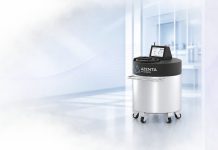
The Interdisciplinary Biomaterial and Database Würzburg (ibdw) has expanded its technical infrastructure with advanced cryogenic storage and automation systems aimed at strengthening long-term biospecimen preservation for medical research. The upgraded platform introduces automated high-performance storage in the gas phase of liquid nitrogen at minus 185 degrees Celsius, complementing the facility’s existing minus 80-degree storage capacity.
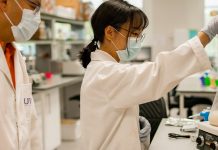
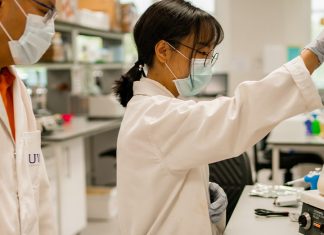
The expansion also includes an automated workstation capable of processing biosamples at minus 100 degrees Celsius while maintaining an uninterrupted cold chain. According to the institution, the system improves operational efficiency and employee safety while supporting environmentally sustainable laboratory practices through the use of refrigerant-free technology that avoids ozone- and climate-damaging substances.
Supporting Growing Demand for High-Quality Biospecimens
Professor Roland Jahns stated, “Our biobank has been working successfully for over ten years and has established itself as a reliable partner for research.” He added that the expansion of the modern nitrogen storage facility, supported by the University Hospital Würzburg and Julius-Maximilians-Universität Würzburg, would improve service capacity for oncology research networks such as the National Center for Tumor Diseases.


Jahns further noted, “The current expansion is a clear signal that the increasing demand from medical research for high-quality biosamples and stabilised human cells can also be met in the future.”
Designed for Flexibility and Traceability
Constructed over a two-year period during ongoing operations, the upgraded system features a modular architecture that can adapt to increasing sample volumes, new sample formats, and evolving scientific requirements. The infrastructure also integrates with existing laboratory and automation systems to support scalable biobanking operations.
The facility emphasized that every stage of biospecimen handling remains fully traceable throughout the sample lifecycle, from storage to research use, while maintaining strict patient data protection standards.
Strengthening Germany’s Research Infrastructure
Professor Tim J. von Oertzen stated, “The expansion of the biobank sends a strong signal for the research location University Medicine Würzburg, for the region and also nationally.” He further described the biobank as “one of the most efficient sites in Germany” and emphasized that it represents “an important basis for shaping medical progress in the future.”
Dr Uwe Klug also highlighted the importance of the infrastructure investment, stating that the ibdw serves as “a central infrastructure for our Faculty of Medicine and an important investment in the future viability of Würzburg as a centre of science.”
About the Author

Biobanking.com delivers valuable news and information on biobanking, biorepositories, cryopreservation, and biosample/biospecimen management, while connects buyers with top vendors globally.