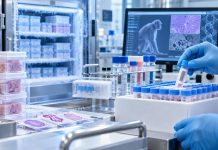
Monkey primary epithelial cells are becoming the new talk of the town in preclinical contexts, making labs worldwide look for models that actually mimic human biology. Those non-human primate (NHP) cells are stepping into the spotlight because they help to close the translational gap between animal data and human reality.
For decades, researchers used to test drugs in rodents but only to watch results fall apart in clinical trials, and NHP cells finally give it a shot at predicting human outcomes more accurately.
Creative Biolabs expanded its NHP primary cell portfolio with a suite of cynomolgus monkey–derived epithelial cells covering the alveolar, bronchial, and bladder systems.


“The new collection is designed to meet the urging demand for models that capture authentic physiological responses beyond traditional rodent systems,” a scientist from the company says, ” with each cell type isolated from cynomolgus monkey tissue that is ethically sourced and characterized for key epithelial markers, thereby guaranteeing phenotype fidelity and experimental reproducibility.”
How the epithelial cells advance research applications
Monkey Alveolar Epithelial Cells Model Respiratory Toxicology
The Cynomolgus monkey primary alveolar epithelial cells are obtained from lung tissue with over 85% purity, which can replicate the pulmonary alveoli microenvironment to build a platform for studies involving inhalation toxicity, drug deposition, and infection mechanisms. Researchers can apply it to simulate human-relevant responses to aerosolized compounds and respiratory pathogens under controlled in vitro conditions or generate cell derivatives for specific research applications.
Monkey Bronchial Epithelial Cells Recreate Airway Physiology
The Cynomolgus monkey primary bronchial epithelial cells are collected from monkey bronchi, which are cryopreserved with appropriate cryoprotectant and function well in airway research involving a wide range of safety assessments and functional assays. They can also play a critical role in respiratory drug screening.
Bladder Epithelial Cells Investigate Urothelial Safety
The Cynomolgus monkey primary bladder epithelial cells bring realism of a real new level to preclinical risk evaluation, especially for toxicologists. These cells have been validated in rigorous tests for bacteria, yeast, fungi, and mycoplasma to be used as a tool for cell-cell interaction, adhesion, PCR, Western blot, immunoprecipitation, immunofluorescent staining, or immunofluorescent flow cytometry assays. They offer a physiologically relevant system for evaluating genotoxicity, drug excretion pathways, and carcinogenic risk in drug safety assessment.
From drug developers to biomedical researchers, Creative Biolabs primary cell banks are a perfect fit for respiratory pharmacology and infectious disease modeling, toxicology and metabolism screening, and precision medicine and translational biology, and they function well as a source of more accurate data with minimized variability normally brought by immortalized or cross-species cell lines.
Meanwhile, Creative Biolabs ensures the tissues and cells are collected under regulatory oversight, with full donor traceability and veterinary supervision—each batch goes through morphological validation, sterility checks, and biomarker profiling to confirm epithelial identity and functionality.
“We stick to ethical sourcing and scientific authenticity,” said the scientist. “which are the cornerstones of this NHP biological bank, with the goal to give researchers reliable tools they can trust without compromising compliance or reproducibility.”
About the Author

Creative Biolabs supports laboratory NHP preclinical studies with a wide array of biological products, including whole blood, serum, plasma, primary cells, tissue, body fluids, and recombinant reagents. As a specialized contract research organization, we offer diverse NHP disease models, providing biologicals from diseased primates. Recognizing the complexity and sensitivity of NHPs in biomedical research, we have developed specialized infrastructure and care to maintain their well-being. Despite the controversy surrounding NHP use, we ensure a steady supply and high-quality service to meet the urgent needs of biomedical research through our dedicated monitoring and evaluation platform.