- First in the Country: UP MSI to set up the Philippines’ first coral larvae cryobank at Bolinao Marine Laboratory.
- Regional Collaboration: Partnership with Taiwan, Indonesia, Malaysia, and Thailand to create the Coral Triangle’s first cryorepository network.
- Restoration Focus: Initial work on fast-growing pocilloporid corals to accelerate reef recovery despite climate stress challenges.
As coral reefs face increasing threats from climate change and human activity, the UP Marine Science Institute (MSI) is set to establish the country’s first coral larvae cryobank facility to boost coral restoration in the Philippines.
This is part of a groundbreaking regional effort to conserve coral reef biodiversity through cryopreservation. The project, entitled “Coral Conservation Capacity Development in the Coral Triangle: A Cryorepository Network for Coral Larvae,” involves research institutions from the Philippines, Taiwan, Indonesia, Malaysia, and Thailand to establish the first regional network of coral larval cryobanks in the Coral Triangle.
“It’s not just about preserving corals today, it’s about building a foundation for future research and reef restoration that can benefit generations to come,” said Dr. Maria Vanessa Baria-Rodriguez, lead of the Philippine research team. Together with her laboratory, the Interactions of Marine Bionts and Benthic Ecosystems Laboratory (IMBiBE), she aims to strengthen the country’s capacity to safeguard coral biodiversity.


The project is led by Dr. Chiahsin Lin of National Dong Hwa University and the National Museum of Marine Biology and Aquarium in Taiwan, and is supported by the Coral Research & Development Accelerator Platform (CORDAP) through the Marine Environment and Resources Foundation, Inc. (MERF).
The project is currently focused on pocilloporid corals with a brooding reproductive strategy. Pocilloporid coral larvae are collected from hatchery-monitored colonies and preserved in liquid nitrogen for long-term storage and future use in coral restoration. Pocilloporid corals are considered weedy species; they are among the first to colonize disturbed reefs due to their rapid growth and fast reproductive cycles. These traits make them valuable for accelerating reef recovery. However, their sensitivity to climate stress, especially coral bleaching, poses a significant challenge to their long-term survival.
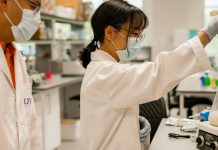
A capacity-building training on cryopreservation was led by Dr. Lin and his students at the UP MSI Bolinao Marine Laboratory last December 1-4, 2024. The training equipped research assistants of the IMBiBE laboratory with essential knowledge and hands-on experience in cryopreservation techniques like vitrification and cryobanking.
Beyond pocilloporids, the project aims to adapt cryopreservation protocols for other coral species and further develop tools such as a fourth-generation laser-assisted warming device and cryojig system.
Since the project’s launch in December 2024, a follow-up training was held in February 2025 at the NMMBA, led by Dr. Lin, further enhancing technical skills and regional collaboration. Ryan Carl De Juan, one of the research assistants at the IMBIBE laboratory, has begun collecting and monitoring brooding Pocilloporid colonies, with initial trials in vitrification and banking resulting in the successful cryopreservation of early-stage coral larvae.
The team continues its monthly efforts to increase the number of cryopreserved larvae across various target coral species. Through this project, the IMBiBE laboratory of UP MSI aims to establish the first coral larval repository or cryobank at the Bolinao Marine Laboratory, under the leadership of Dr. Maria Vanessa Baria-Rodriguez.
About the Author

Biobanking.com delivers valuable news and information on biobanking, biorepositories, cryopreservation, and biosample/biospecimen management, while connects buyers with top vendors globally.