Introduction
Technological progress has shifted biobanking from traditional to modern practices, with an increasing widespread digital adoption. Digital biobanking manages, stores, and analyzes biological samples and data using digital systems and technologies.
Digital biobanking is revolutionizing the management and use of biological resources, opening the door to ground-breaking medical and other discoveries. Biobanks’ daily operations and workflows are changing as a result of the introduction of digitization in the biobanking industry. Medical research, practice, and biobanking procedures can all make use of a variety of digital systems and technologies. These digital tools can be very beneficial, but they also come with a lot of obligations.
The intent of this article is to discuss how digital systems streamline various activities of the biobank, its application, challenges involved, and an overview of some digital biobanks.


Sample Management
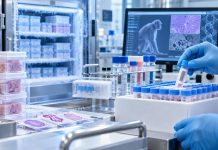
In digital biobanks, automated stations manage biospecimen transport, aliquoting, and freezing/storage (Baber & Kiehntopf, 2019). These systems enable digital tracking of storage conditions and routing. Biomaterial tubes with barcodes/QR codes are widely used, linking samples to donor IDs and reducing confusion (Jacobs et al., 2018). Radio frequency identification (RFID) technology offers an alternative, providing more data without visualization and functioning inside transport boxes, cryotubes, or samples to monitor temperature during storage, transport, or pre-analysis (Lou et al., 2011). Real-time temperature monitoring is crucial, as fluctuations degrade specimen quality (Powel et al., 2019; Babel et al., 2020; Germann et al., 2013). Modern low-temperature freezers and liquid nitrogen systems already integrate real-time temperature monitoring tools. Emerging trends include augmented-reality glasses for biospecimen handling (Niedermair, 2022) and drones for faster biomaterial transport, especially in rural or infrastructure-limited areas (Ackerman et al., 2018).
Informed Consent
Electronic consent forms streamline workflows and can be stored in clinical information systems (Niedermair, 2022). Developing digital consent platforms allows patients to update personal data, modify consent, and track study results (Appenzellar et al., 2022). Electronic informed consent further simplifies the process, storing specific consent points directly in clinical systems.
Data Integration
In digital biobanks, metadata—patient demographics, medical history, genomic/imaging data, and lifestyle factors—are integrated with sample data. Large datasets are efficiently stored and retrieved via advanced databases and cloud-based platforms.
Interoperability
Digital biobanking systems follow standards like Fast Healthcare Interoperability Resources (FHIR) and Health Level Seven (HL7) to ensure seamless integration with LIMS, EHRs, and other healthcare IT systems.
Security and Privacy
In digital biobanking, sensitive biological and personal information are protected by the use of strong encryption, access controls, and anonymization methods. Ethical data handling is ensured by adherence to laws like the General Data Protection Regulation (GDPR) and the Health Insurance Portability and Accountability Act (HIPAA).
AI and Analytics
Large-scale datasets are analyzed by machine learning and artificial intelligence (AI) tools to find trends, forecast results, and biomarkers. AI-powered insights have the potential to speed up translational research and aid in the creation of precision medicine plans.
Cloud Computing
Large volumes of biobank data can be stored and analyzed on scalable cloud-based platforms, enabling global researchers to collaborate securely via shared datasets.
Blockchain Technology
Blockchain technology, a key part of digital biobanking, enhances operations, traceability, transparency, and trust through immutable transaction records. It also manages consent and ensures ethical compliance.
Digital Pathology
Digital technologies benefit biobanks storing formalin-fixed, paraffin-embedded (FFPE) tissues. Fully digitized FFPE slides can be stored with annotations and pathology data in image databases and analyzed using AI or machine learning for research (Ramekrishnan et al., 2023).
Applications of Digital Biobanking
Digital biobanking is found useful in the following field:
Personalized Medicine
Customized treatments based on a person’s genetic composition are made possible by digital biobanks, which combine genomic data with clinical records.
Population Health Studies
Large-scale biobanks with digital biobanking technologies are used to conduct epidemiological research to understand disease prevalence, risk factors, and potential interventions across populations.
Drug Discovery and Development
With digital biobanking, target identification, validation, and preclinical testing of novel treatments are accelerated by efficient access to a variety of biological samples and associated data.
Rare Disease Research
By compiling rare disease data from around the world, digital biobanks allow researchers to examine conditions that might not otherwise have enough participants or samples.
Overview of Some Digital Biobanks
UK Biobank
UK Biobank, one of the largest biobanks, links health, lifestyle, and genetic data from over 500,000 participants. It uses AI and advanced analytics to drive progress in disease prevention and genomics. Since 2006, donors have provided extensive health, activity, dietary, mental health, omics, and diagnostic data (Bukreeva et al 2024).
All of Us Research Program (USA)
The National Institutes of Health’s All of Us Research Program hosts genomic and phenotypic data from one million U.S. participants. Its mission is to accelerate medical research and clinical breakthroughs with an emphasis on diversity. (Ginsburg et al,2023). It aims to advance precision medicine by creating a comprehensive database of health data from one million participants. Digital technologies are being employed to gather, analyze, and engage participants.
Biobank Graz (Austria)
In Biobank Graz, cutting-edge digital tools are used for data integration and sample tracking, with a focus on cancer research.
China Kadoorie Biobank
The China Kadoorie Biobank (CKB) is a population-based cohort of > 512,000 adults recruited (2004–2008) from 10 diverse Chinese regions (Robin et al., 2023). Digital platforms were employed for efficient data management and analysis.
Difficulties and Challenges
Digitization often involves high costs, including new equipment, software, or upgrades. RFID use is broader than barcodes, but unreadable samples must be reviewed. Data heterogeneity and quality issues are challenging as formats differ, limiting algorithmic potential. An international standard format and reliable, secure infrastructure with fast interfaces are needed for interoperable hardware/software systems. Above all, equity, privacy, secure biomaterial/data handling, and traceable storage must be ensured.
Conclusion
Digitalization has transformed biobanking from static sample repositories into dynamic, data-driven research infrastructures that form the backbone of modern biomedical innovation. Digital biobanks, coordinated by national or international legislation, are vital for advancing academic, pharmaceutical, and translational research and accelerating preclinical/clinical studies.
References
- Tozzo P., Delicati A., Marcante B., Caenazzo L. Digital Biobanking and Big Data as a New Research Tool: A Position Paper, Healthcare 11 (2023) 1825.
- Chen C., Lee P.I, Pain K.J, Delgado D., Cole C.L, Campion T.R. Replacing Paper Informed Consent with Electronic Informed Consent for Research in Academic Medical Centers: A Scoping Review, AMIA Joint Summits on Translational Science proceedings. AMIA Joint Summits on Translational Science 2020: 80–88.
- Haas M.A, Teare H., Prictor M., Ceregra G.,Vidgen M.E, Bunker D., Kaye J., Boughtwood T. ‘CTRL’: an online, Dynamic Consent and participant engagement platform working towards solving the complexities of consent in genomic research, Eur J Hum Genet 29 (2021) 687–698.
- Appenzeller A., Hornung M., Kadow T., Krempel E., Beyerer J.Sovereign Digital Consent through Privacy Impact Quantification and Dynamic Consent, Technologies 10 (2022) 35.
- Baber R., Kiehntopf M., Automation in biobanking from a laboratory medicine perspective, Journal of Laboratory Medicine 43 (2019) 329–338.
- Jacobs G., Wolf A., Krawczak M., Lieb W. Biobanks in the Era of Digital Medicine, Clinical Pharmacology and Therapeutics 103 (2018) 761–762.
- Lou J.J, Andrechak G., Riben M., Yong W.H. A review of radio frequency identification technology for the anatomic pathology or biorepository laboratory: Much promise, some progress, and more work needed, Journal of Pathology Informatics 2 (2011) 34.
- Babel M., Mamilos A., Seitz S., Niedermair T., Weber F., Anzeneder T., Ortmann O., Dietmaier W., Brochhausen C.Compared DNA and RNA quality of breast cancer biobanking samples after long-term storage protocols in – 80 °C and liquid nitrogen, Scientific reports 10 (2020) 14404.
- Germann A., Oh Y.J, Schmidt T., Schön U., Zimmermann H., Von Briesen H. Temperature fluctuations during deep temperature cryopreservation reduce PBMC recovery, viability and T-cell function, Cryobiology 67 (2013) 193–200.
- Weikert J., Mehrländer A., Baber R. Keep cool! Observed temperature variations at different process stages of the biobanking workflow – examples from the Leipzig medical biobank, Journal of Laboratory Medicine 47 (2023) 69–80.
- Powell S., Molinolo A., Masmila E., Kaushal S., Real-Time Temperature Mapping in Ultra-Low Freezers as a Standard Quality Assessment, Biopreservation and biobanking 17 (2019) 139–142.
- Ramakrishnan V., Schönmehl R., Artinger A., Winter L., Böck H., Schreml S., Gürtler F., Daza J., Schmitt V.H, Mamilos A., Arbelaez P., Teufel A., Niedermair T.,Topolcan O., Karlíková M., Sossalla S., Wiedenroth C.B, Rupp M., Brochhausen C. 3D Visualization, Skeletonization and Branching Analysis of Blood Vessels in Angiogenesis, International journal of molecular sciences 24 (2023).
- Bonizzi G., Zattoni L., Fusco N.Biobanking in the digital pathology era, Oncology Research 29 (2021) 229–233.
- Aeffner A.,Zarella M.D, Buchbinder N., Bui M.M, Goodman M.R, Hartman D.J, Lujan G.M, Molani M.A, Parwani A.V,Lillard K., Turner O.C, Vemuri V.N.P, Yuil-Valdes A.G, Bowman D. Introduction to Digital Image Analysis in Whole-slide Imaging: A White Paper from the Digital Pathology Association, Journal of Pathology Informatics 10 (2019) 9.
- Im K.,Gui D.,Yong W.H, An Introduction to Hardware, Software, and Other Information Technology Needs of Biomedical Biobanks, Methods in molecular biology (Clifton, N.J.) 1897 (2019) 17
- Seidler D., Karlíková M., Topolčan O.,Snítilá M., Niedermair T.,Brochhausen C. Establishing Biobanking in Medical Curricula-The Education Program “Precision Medicine International” (eduBRoTHER), Biopreservation and biobanking 21 (2023) 200–207.
- Niedermair, T. Digitization in Biobanking: Where to Find It and What Can We Expect? Trillium Pathol. 2024, 3, 8–11.
- Haas, M.A.; Teare, H.; Prictor, M.; Ceregra, G.; Vidgen, M.E.; Bunker, D.; Kaye, J.; Boughtwood, T. “CTRL”: An Online, Dynamic Consent and Participant Engagement Platform Working towards Solving the Complexities of Consent in Genomic Research. Eur.J. Hum. Genet. 2021, 29, 687–698.
- Ackerman, E.; Strickland, E. Medical Delivery Drones Take Flight in East Africa. IEEE Spectr. 2018, 55, 34–35.
- Ginsburg GS, Denny JC, Schully SD. Data-driven science and diversity in the All of Us Research Program. Sci Transl Med. 2023;15(726):9214.
- Bukreeva AS, Malsagova KA, Petrovskiy DV, Butkova TV, Nakhod VI, Rudnev VR, Izotov AA, Kaysheva AL. Biobank Digitalization: From Data Acquisition to Efficient Use. Biology (Basel) 2024;13(12):957.
- Robin G. Walters, Iona Y. Millwood, Kuang Lin, Dan Schmidt Valle, Pandora McDonnell, Alex Hacker, Daniel Avery, Ahmed Edris, Hannah Fry, Na Cai, Warren W. Kretzschmar, M. Azim Ansari, Paul A. Lyons, Rory Collins, Peter Donnelly, Michael Hill, Richard Peto, Hongbing Shen, Xin Jin, Chao Nie, Xun Xu, Yu Guo, Canqing Yu, Jun Lv, Robert J. Clarke, Liming Li, Zhengming Chen. Genotyping and population characteristics of the China Kadoorie Biobank. Cell Genomics. 2023 Vol.3(8)
About the Author

Bsc. Zoology, BMLS, Msc. Biobanks & Complex data management (In view)
Tijani Abdulrahman is a medical laboratory scientist and a biobanking professional with 10+ years of demonstrated history in working in the medical science practice industry. Skilled in laboratory medicine, biobanking, quality management system and biomedical research. Currently a master’s student at the University Cote d’Azur, France with focus on Biobanking and complex data management. With a multidisciplinary background Tijani Abdulrahman strives to champion biobank and biomedical enabled research in order to strengthen biobank and biomedical innovation.