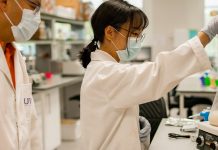
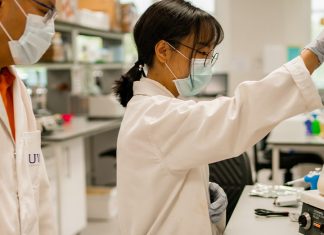
Biobanking is a specialized part of laboratory medicine and research that collects, processes, and stores biological samples and biomedical information obtained from surgeries or autopsies from volunteer study participants to facilitate clinical workups or research for healthcare discoveries (1). The primary purpose of biobanks is to better understand the pathophysiology of health diseases, diagnoses, prevention, and translational research in developing novel diagnostic tests or drug discoveries. However, access to these biobanking samples and data is very challenging. The challenges rely on who can access these specific biobank samples and health data. Samples and data came from volunteer study participants who consented to participate in biobanking. There is a risk in getting these tissue samples, such as infection risk or bleeding, and breaching ethical principles of confidentiality. Biobanks are funded by the government and maintained by academic affiliation, in which access to the information will support its research interest (2). With the advancement of healthcare, like artificial intelligence, we need a data-sharing technology to minimize biobank access challenges. We can learn from what some commercial companies do; they utilize data sharing through a confidence-worthy system (3).
Should the government or academic institutions share access to these biobanks with others? Isn’t the patient voluntarily giving tissues and information to the Biobank to help discover? Sharing access to biobanking with other researchers may help people with their discoveries. Understandably, biobank-affiliated hospitals or academia may be reluctant to share because they want to publish papers or clinical research ahead of others.
Evolution of Biobanking
Biobanking started in 1951 at Johns Hopkins Hospital when they got cancer cells from Henrietta Lacks (HeLa) without consent. These HeLa cells were easy to reproduce and helped many researchers worldwide to understand diseases, including polio vaccine development (4). Some university-affiliated hospitals store “leftover” aliquot samples in a freezer for future use, standardizing the regulation and guidelines of cell reproducibility to protect patients and the controlled organizations in biobanking.


A few decades ago, technology began to evolve in computerization and came up with answers in human genome sequencing that identified some risks of diseases through gene analysis and diagnostic biomarkers using the samples and data from biobanking. The advancement of biobanking has helped researchers discover drugs and diseases. The discovery of Herceptin, a trastuzumab antibody that helps treat people with subtypes of breast cancer, or the discovery of what causes AIDS in the early 1980s. The National Cancer Institute Cooperative works to establish a biobank of cancer species to help medical researchers with their discoveries (5), and the University of California San Francisco AIDS specimen bank contributed to the discovery of AIDS (6). Access to these biobanks allows people to get treatment for their diseases. Recent debates about the challenges of who can access these biobanks still need to be structured, standardized, or harmonized.
Can Biobanking Learn From Social Media?
In other contexts, social media evolution has been a dynamic journey that affects our daily lives, from socialization to economy to health and the dissemination of information. It transforms simple communication platforms into robust connectivity, marketing, and global interaction tools. You can see your friends on Facebook easily, “like” a picture of your friend on Instagram, watch learning skills on YouTube, post a message on X, find a job on LinkedIn, look for ideas on Pinterest, or reach out to acquaintances around the globe using WhatsApp, to name a few. We use social media in our daily lives. According to the 2024 social media data report, more than 5 billion social media users make up around 59-63% of the global population (7). Mobile apps on these social media platforms make them more accessible to people. Social media is continuously evolving and adapting to changing technologies, so why not adapt these changes to innovation in biobanking?
In our digital world, the era of connecting people is much easier than a few decades ago. We can easily reach out to people through social media in seconds. We can be acquainted with our families and friends much quicker. Connecting people via social media has created a positive outlook on socialization. When we socialize, we update others and ourselves on what is happening in our surroundings. We network and share content and ideas on a social media platform. What if we mirror this type of “access” of socialization and networking in the digital world of research collaboration in biobanking? Can we find a way to connect and access other research laboratories in biobanking easily?
Research Fragmentation Limits Discoveries
Fragmentation in healthcare may be an obstacle to solving healthcare innovation. Resources should be abundant to attain innovation. The discovery of drugs, medical devices, and diagnostic tools gets answers through research. To minimize fragmentation in biobanking, we need to have a centralized data repository and access associated health data, like any genetic information from diverse sources to accelerate the collaborative research approach and make it easier for biomarker and drug development discoveries.
Connecting social media platforms among researchers, clinicians, laboratory personnel, bioinformatics, and data scientists positively affects research. We can use social media for community engagement and public awareness to disseminate information to get more people to sign up as volunteer study participants and learn how social media may solve some of the connectivity and biobanking barriers of research fragmentation.
Despite skepticism about privacy, we embraced social media widely. Following the idea of social media may work better in our fragmented research. Imagine an institution with a bright scientist and a dedicated clinician who would have wanted to research why their patient was not responding to treatment and would like to get an answer by putting all the information into digital biobanking. Accessing information from biobanks helped the researchers find cures for people’s unknown diseases faster. What if they could be like friends on social media, sharing photos and news feeds and posting as if biobanks share information with other researchers? Suppose biobanking facilities had easy access when they were running the same questions with their research. In that case, discoveries would be faster, more people in society could avail of these discoveries, and in turn, more people would be encouraged to sign up to participate in biobanking.
Fact-Checks on Social Media or Audits in Research
Social media, as a platform, can disseminate wrong information faster. Misinformation is rampant on social media, and healthcare must have fact-checks to know which information is fake or accurate. Healthcare information from social media needs verification from a reliable institution’s post. Any misinformation in biobanking can be solved by transparent communication with the study participants, ensuring that informed consent is clear on the potential risks and benefits. Data verification is a critical process in biobanking to ensure data accuracy. We can learn how social media implements strategies to minimize false information, as biobanks intend to reduce potential harm.
Collaborators get answers to their research through biobanking. Sharing is caring, as we are after a discovery for the people. Social media’s role in collaboration is communication and connectivity through instant messaging, video conferencing, and networking. Social media is a form of information sharing that involves sharing content, collaborative document efforts using Google or Microsoft Drive, and enabling teams to create and maintain shared knowledge repositories. Project management by integrating social media featuring comments by team collaboration or tracking projects of any assigned tasks. Social media and collaboration continue to evolve and drive new ways of working and interacting. Why can’t we adapt information sharing and continuously find ways to improve biobanking as social media does?
Ethics of Biobanking and Social Media
Ethical considerations in social media and biobanking are essential to protecting individual rights, maintaining public trust, and ensuring the responsible use of data. Both aim to prevent harm and contribute to better connectivity in social media and health discovery in biobanking. Researchers or clinicians may be reluctant to share information because they want to get that publication first and fear competition.
The ethical dilemma: Who owns the sample? Who will decide how it should be used or processed? To avoid ethical issues in biobanks, researchers and clinicians should consider ethical factors such as maintaining patient-centered informed consent, privacy, protection, and even returning patient results.
Conclusion
There are some challenges and considerations in sharing information in biobanking. Data privacy and security when sharing information is always crucial. To protect user data, build trust, and ensure a safer online environment, addressing data privacy and security in biobanking requires a different approach, which includes security measures, privacy design principles, and regulatory compliance. As social media poses a threat to privacy, biobanking data sharing can adapt social media practices by implementing multi-factor authentication, de-identification of patient information, and ensuring that informed consent clearly explains what data will be collected, processed, and how it will be used, stored, and shared with other researchers. Ultimately, biobanking contributes significantly to improving health outcomes and advancing science and medicine, and we should learn from social media.
References:
- Shabihkhani M, Lucey GM, Wei B, et al. (2014) The procurement, storage, and quality assurance of frozen blood and tissue biospecimens in pathology, biorepository, and biobank settings. Clinical Biochemistry, Biorepositories and Biobanks 47(4–5): 258–266.
- Langhof H., Kahrass H., Sievers S., Stretch D. Access policies in biobank research: what criteria do they include and how publicly available are they? A cross-sectional study. Nature. European J of Human Genetics. 2017. Vol 25, pages 293-300.
- Graham M. Data for sale: trust, confidence, and sharing health data with commercial companies. J Med Ethics. 2021 doi: 10.1136/medethics-2021-107464.
- Turner T. Development of the Polio vaccine: a historical perspective of Tuskegee University’s role in mass production and distribution of HeLa cells. J Health Care Poor Underserved. 2012;23:5–10.
- Slamon DJ, Clark GM, Wong SG, Levin WJ, Ullrich A, McGuire WL. Human breast cancer: correlation of relapse and survival with amplification of the HER-2/neu oncogene. Science (New York, NY) 1987;235:177–182.
- Rose R, Nolan DJ, Maidji E, Stoddart CA, Singer EJ, Lamers SL, McGrath MS. Eradication of HIV from tissue reservoirs: challenges for the cure. AIDS Res Hum Retroviruses. 2018;34:3–8.
- Datareportal, Social media report. https://datareportal.com/reports/digital-2024-deep-dive-5-billion-social-media-users. Retrieved July 7, 2024.
About the Author

Dr. Francis Torres was a foreign medical physician from the Philippines before he migrated to the USA. He has many years of experience in a clinical hematology laboratory, Anatomy & Physiology adjunct faculty, and is now working as an oncology clinical research associate at CHRISTUS Children's in San Antonio Texas.